FROM PPE to Prevention: Why Safety Systems Fail - and How to Fix Them
Most injuries don't start with a mistake - they start with systems.
By the time a slip, trip, or fall occurs, the condition that caused it have usually existed for days, weeks, or even months. The injury is simply the final visible moment in a longer chain of decisions, conditions, and missed signals.
In this article, we break down how risk develops over time, why PPE often becomes the last line of defense, and where prevention actually begins - long before an incident occurs.
Slips, trips, and falls on the same level are one of the most common and predictable injury types across construction and industrial environments. Unlike falls from height, they are rarely caused by a single failure - they emerge when housekeeping, tools, walking paths, and work sequencing slowly drift out of control.
This is where the Hierarchy of Controls helps reveal not just what failed, but where they system weakened first.
Injuries Don’t Begin at the Moment of the Fall
When a same-level fall occurs, attention naturally focuses on the moment it happened.
But injuries rarely result from a single decision. They typically reflect multiple factors - environmental conditions, work processes, and individual actions - aligning at the same time.
Understanding those contributing factors allows organizations and workers to focus on improving prevention rather than assigning fault after the fact.
In most cases, a slip, trip, or fall follows a familiar and preventable pattern.
How Risk Develops Over Time
PPE as the Final Layer of Protection
Personal Protective equipment is most effective when it supports higher-level controls - not when it becomes the primary way risk is managed. Many of the PPE issues observed in the field - improper fit, inconsistent use, or refusal - are often indicators that upstream controls are not functioning as intended.
When PPE becomes the first line of defense, it usually signals gaps in planning, coordination, housekeeping, or work sequencing that should be addressed earlier in the system.
Housekeeping and Work Conditions
Walking paths, cords, debris, spills, and uneven surfaces can change quickly on active jobsites. Clear standards, consistent verification, and regular reviews help ensure these conditions are identified and corrected before exposure increases.
This is where one-site safety leadership plays a critical role - not by redesigning the work, but by ensuring controls are maintained, followed, and adjusted as conditions evolve.
Tools and Equipment Conditions
Tools and equipment naturally wear over time. Routine inspection, maintenance, repair processes, and removal from service help prevent unintended hazards from entering the walking and working areas.
When these processes break down, risk accumulated quietly until an incident occurs. Field-level oversight helps identify these gaps early - before the next task begins.
When a Fall on the Same Level Occurs
When a fall on the same-level fall occurs, it is often the result of multiple contributing factors coming together - not a single moment of inattention.
Looking at these factors together helps teams identify where systems failed to hold, and where controls need reinforcement before the next task or shift.
Why the Series Followed the Hierarchy in Reverse
This article builds on insights shared through our ongoing LinkedIn series - including Safety Tip Tuesday, What Would You Do Wednesday, and Throwback Thursday - where we examine everyday conditions like damaged tools, housekeeping breakdowns, and production pressure that quietly introduce risk long before an injury occurs.
These posts reflect how hazards are encountered in real work environments - not how they should be prevented. Viewed alongside this article, they show how visible incidents are often the final outcome of conditions and decisions that developed upstream.
You can explore examples from these ongoing series on our LinkedIn page, where we share field-based safety insights, and systems-focused guidance.
The Hierarchy of Controls - Applied as Intended
The Hierarchy of Controls is not about redesigning projects - it is about identifying where risk is introduced, where controls are weakening, and where reinforcement is needed in real time.
It provides a shared framework for leadership, safety professionals, supervisors, and workers to evaluate exposure and verify that controls are functioning as planned.
Higher-level of controls reduce reliance on individual behavior. Administrative controls and PPE help manage remaining risks - but only when the system around them is working.
The Hierarchy is an order of effectiveness, not an order of convenience - and field-level oversight is essential to ensure it is applied as intended.
Elimination - Remove the hazard where possible through planning and sequencing
Substitution- Replace the hazard with a safer material, process, or method.
Engineering Controls- Verify physical controls are in place and functioning
Administrative Controls - Reinforce procedures, coordination, and work practices.
PPE - Protect the worker when higher controls cannot fully eliminate exposure.
As controls move lower in the hierarchy, reliance on human behavior increases. - making verification, consistency, and leadership presence more critical.
The Key Takeaway
Slips, trips, and falls are predictable because the conditions that cause them to persist over time.
Improvement comes from strengthening how systems, environments, and people work together to manage risk - not from relying on PPE or individual behavior alone.
When hazards are addressed early through planning, verification, and consistent processes, exposures decreased and injuries become far less likely to occur.
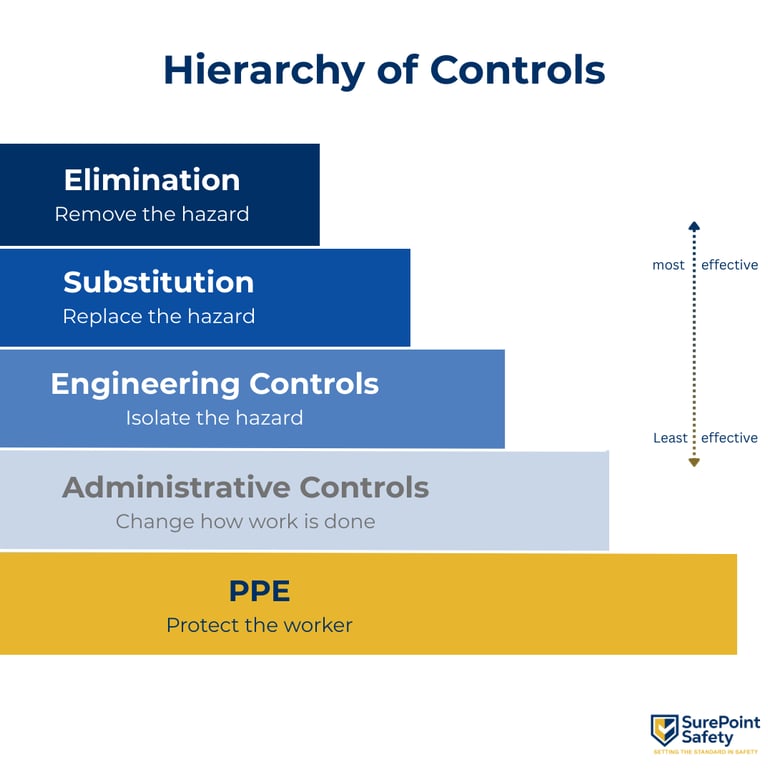
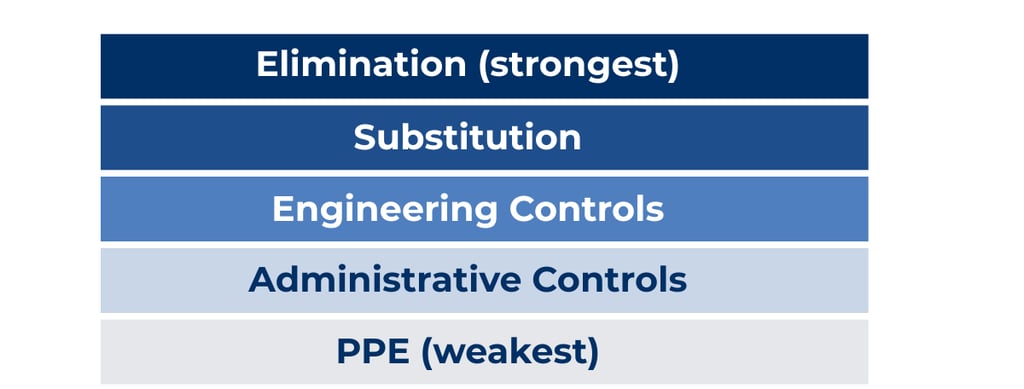
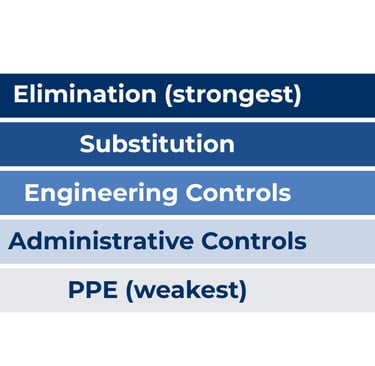
The Hierarchy of Controls shows where safety is strongest - and where it is most often applied too late.
The SurePoint Safety Approach
At SurePoint Safety, we focus on prevention before exposure and systems before discipline.
We work alongside project teams to identify where hazards are introduced, verify that controls are functioning, and strengthen safety systems in practical, sustainable ways.
Because the safest job site isn't defined by one control - it's built when risk is reduced before it reaches the worker.
When controls are applied late or maintained inconsistently, risk accumulates quietly until the worker becomes the final barrier.
Tel: (717) 586-8801
mail to: info@surepointsafety.com
OSHA ~ CHST ~ GSP ~ First Aid & CPR Instructor ~ Insured & E&O Certified
QUICK LINKS
SurePoint Safety
© SurePoint Safety 2025 . All Rights Reserved | Privacy Policy | Disclaimer
Follow us
Federal Vendor Information
UEI: E2WFMLFP | CAGE: 15UK7
SAM.gov: Active
NAICS: 541620 — 541690 — 561320 —611519
Proud Member: Central PA Chamber of Commerce


SurePoint Safety provides advisory and support services only. We do not direct work activities, enforce discipline, or control construction means and methods. Responsibility for jobsite safety remains with the controlling employer.
WOSB—Certified Women's Small Business